Theo Schmidt · 11 September 2026
Examining Machine Learning Integration for Dynamic Note Categorization in Distributed Work Environments
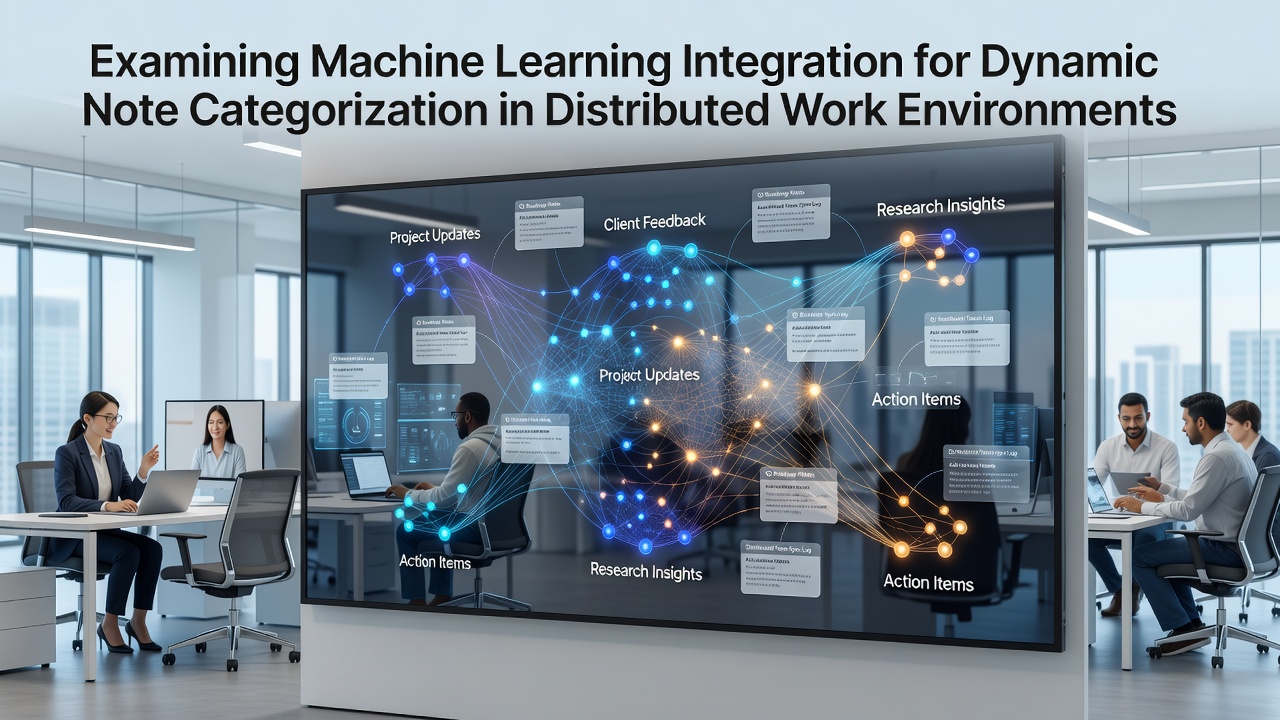
Distributed work environments rely on shared digital notes for coordination across time zones and locations, and machine learning now drives dynamic categorization that adjusts labels based on content patterns and team interactions. Systems analyze text, metadata, and usage signals to group notes into evolving categories such as project milestones, risk assessments, or resource allocations without manual intervention. Data from multiple sources shows that organizations adopting these tools report faster retrieval times and reduced duplication in shared repositories.
Core Mechanisms Behind Dynamic Categorization
Machine learning models process incoming notes through natural language processing pipelines that extract entities, sentiment indicators, and contextual relationships, then map them to category clusters updated in real time. Supervised learning trains on labeled datasets from past projects while unsupervised approaches identify emerging themes from unlabeled streams, and reinforcement feedback loops refine accuracy when users confirm or correct suggestions. Researchers at institutions tracking workplace technology note that hybrid models combining both techniques maintain performance even when note volumes spike during quarterly planning cycles.
Integration occurs through APIs that connect note platforms with existing collaboration suites, allowing categorization rules to draw from calendar events, task assignments, and communication threads. This setup ensures categories reflect not only content but also workflow states, such as shifting a note from planning to execution once linked milestones receive completion markers.
Implementation Patterns in Remote and Hybrid Teams
Teams operating across continents use these systems to maintain consistent taxonomies despite differing terminology preferences in local offices. One deployment at a multinational engineering firm automatically reclassified technical specifications under regional compliance headings after regulatory updates took effect, and similar patterns appear in healthcare consortia where patient-related notes receive privacy-tier labels based on content sensitivity scores. Figures from industry reports indicate adoption rates climbed steadily through 2025 as bandwidth improvements supported heavier model inference loads on edge devices.
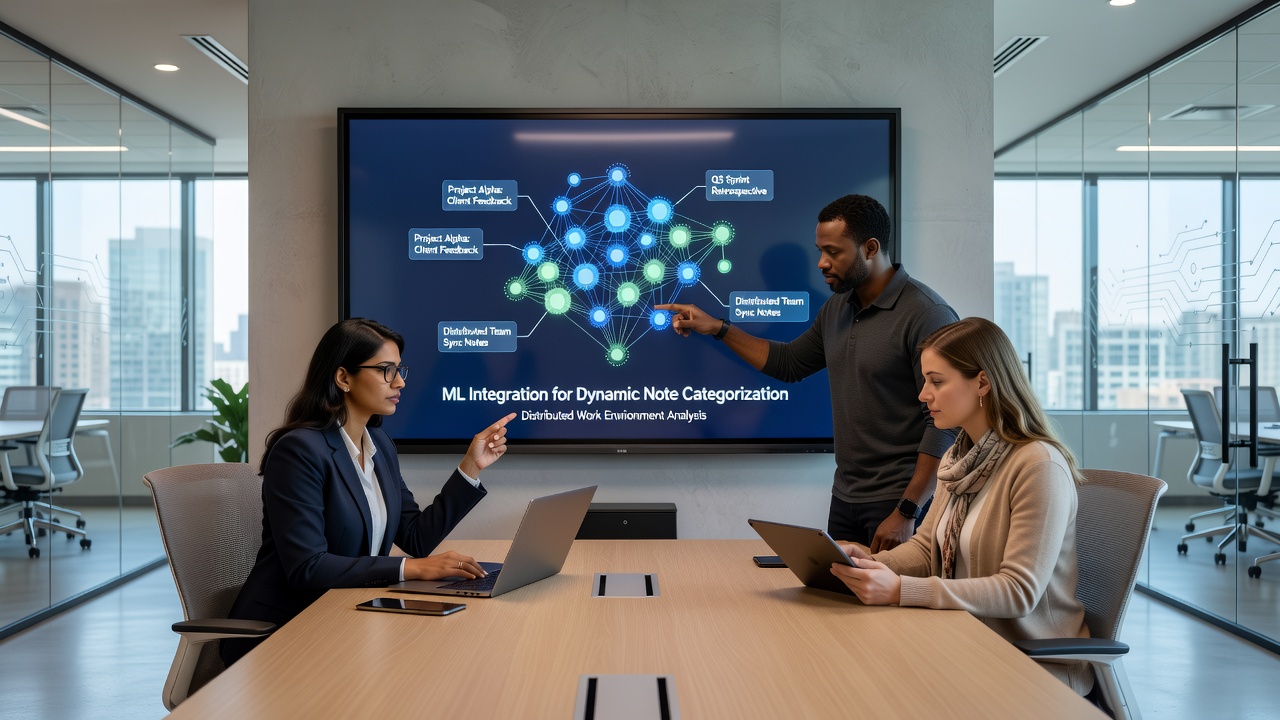
By September 2026, several enterprise platforms plan expanded support for multilingual categorization that handles simultaneous input in English, Mandarin, and Spanish within single repositories. This development addresses documented gaps in cross-border project documentation where translation delays previously fragmented knowledge bases. Observers tracking technology diffusion point to pilot programs in Canadian federal agencies that demonstrated measurable gains in cross-departmental search efficiency after deploying such multilingual models.
Data Requirements and Model Training Considerations
Effective models depend on diverse training corpora drawn from actual distributed workflows rather than generic text collections, because domain-specific jargon and collaboration shorthand influence classification boundaries. Organizations curate anonymized note archives for initial training then apply differential privacy techniques during ongoing updates to protect individual contributor identities. According to guidelines published by the Australian Department of Industry, Science and Resources, transparency in training data sources remains essential for maintaining user trust in automated systems.
Continuous monitoring tracks drift when new project types introduce vocabulary that existing categories fail to capture, prompting periodic retraining cycles. Teams that schedule these reviews alongside sprint retrospectives report smoother transitions compared with ad-hoc approaches.
Security and Compliance Dimensions
Dynamic categorization must align with data residency rules and access controls that vary by jurisdiction, so models incorporate location-aware filters that restrict category propagation across certain borders. The European AI Alliance documentation outlines requirements for audit trails that log every automated label change, enabling compliance officers to verify adherence during external reviews. Distributed environments amplify these needs because notes often traverse multiple cloud regions before final storage.
Conclusion
Machine learning integration for dynamic note categorization continues to evolve alongside distributed work practices, with technical capabilities expanding to handle greater linguistic and regulatory complexity. Organizations evaluating these tools examine training data provenance, integration depth with existing platforms, and alignment with regional compliance frameworks before scaling deployments. Ongoing research from academic and governmental bodies supplies benchmarks that help teams measure performance against operational requirements rather than abstract accuracy metrics.